.webp)

.svg)
.svg)

Before AI transforms your business, it tests your culture
Before AI transforms your business, it tests your culture
For CEOs and CHROs racing toward AI adoption, the real risk isn’t technology; it’s the culture AI will amplify.
This article is the third of a three-part series exploring how AI, leadership, and culture intersect to shape organizational performance. In this series, we examine the human and organizational levers that determine whether AI becomes a tool, or a true performance multiplier.
AI has been framed as a workplace revolution, but that story is incomplete. In reality, AI rarely rewrites how organizations operate; it magnifies the behaviors and norms already running the system. The real question leaders should ask is not “What can AI do?” but “What will AI expose?”
Organizations with strong alignment between purpose, strategy, and culture generate significantly better outcomes: 44.5% average revenue growth over three years according to research validated by Stanford and Culture Partners. And when cultural foundations are weak, AI doesn’t fix anything; it simply accelerates misalignment. Seventy‑four percent of companies still struggle to achieve tangible value from AI because they lack the organizational capabilities and culture required to scale it effectively.

Why culture comes first
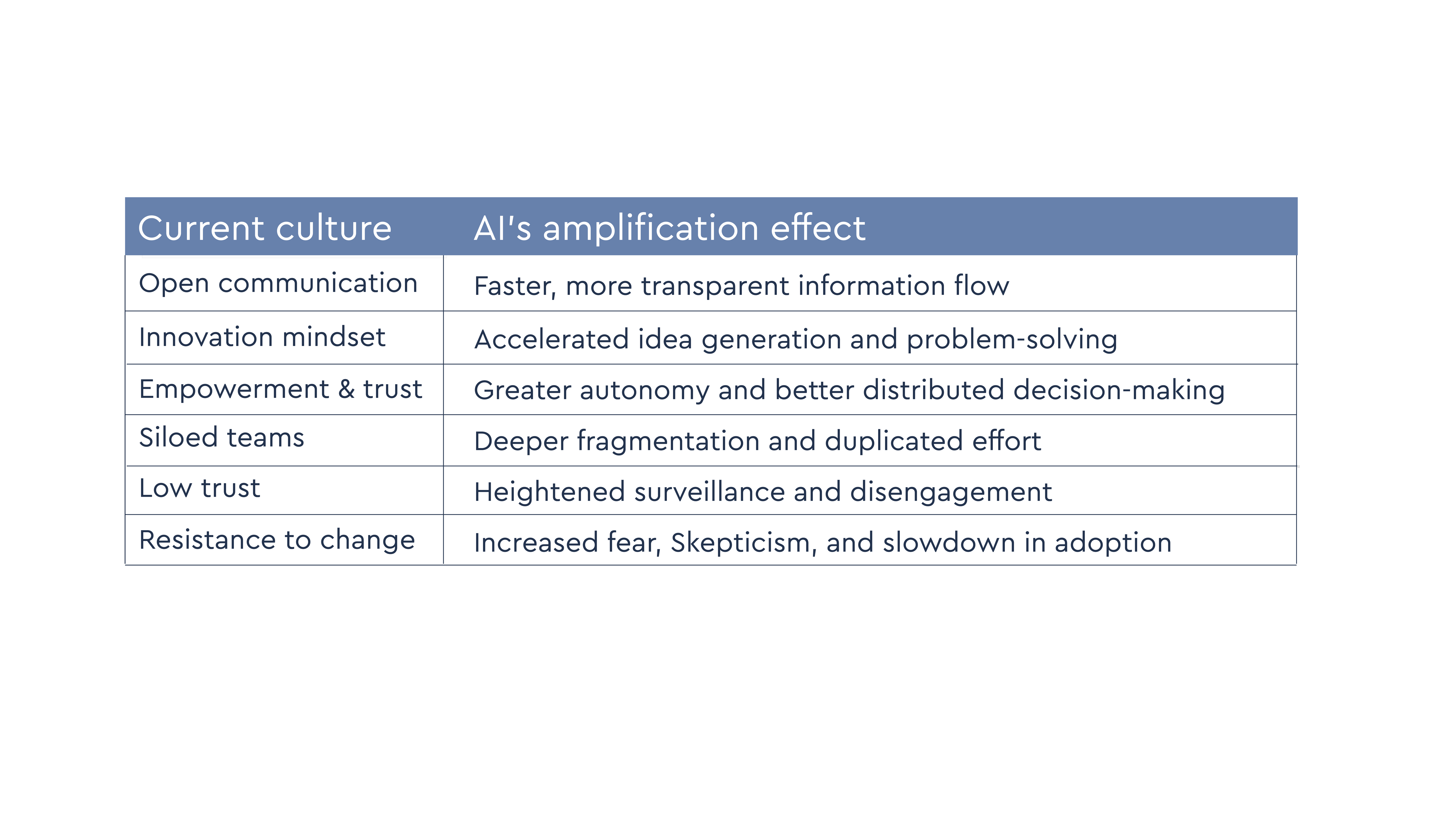
A strong culture is not a nice‑to‑have, it’s the force multiplier that determines whether AI drives performance or chaos. If your culture is accountable, adaptive, and transparent, AI amplifies those traits. If it’s siloed, low‑trust, or inconsistent, AI scales the dysfunction.
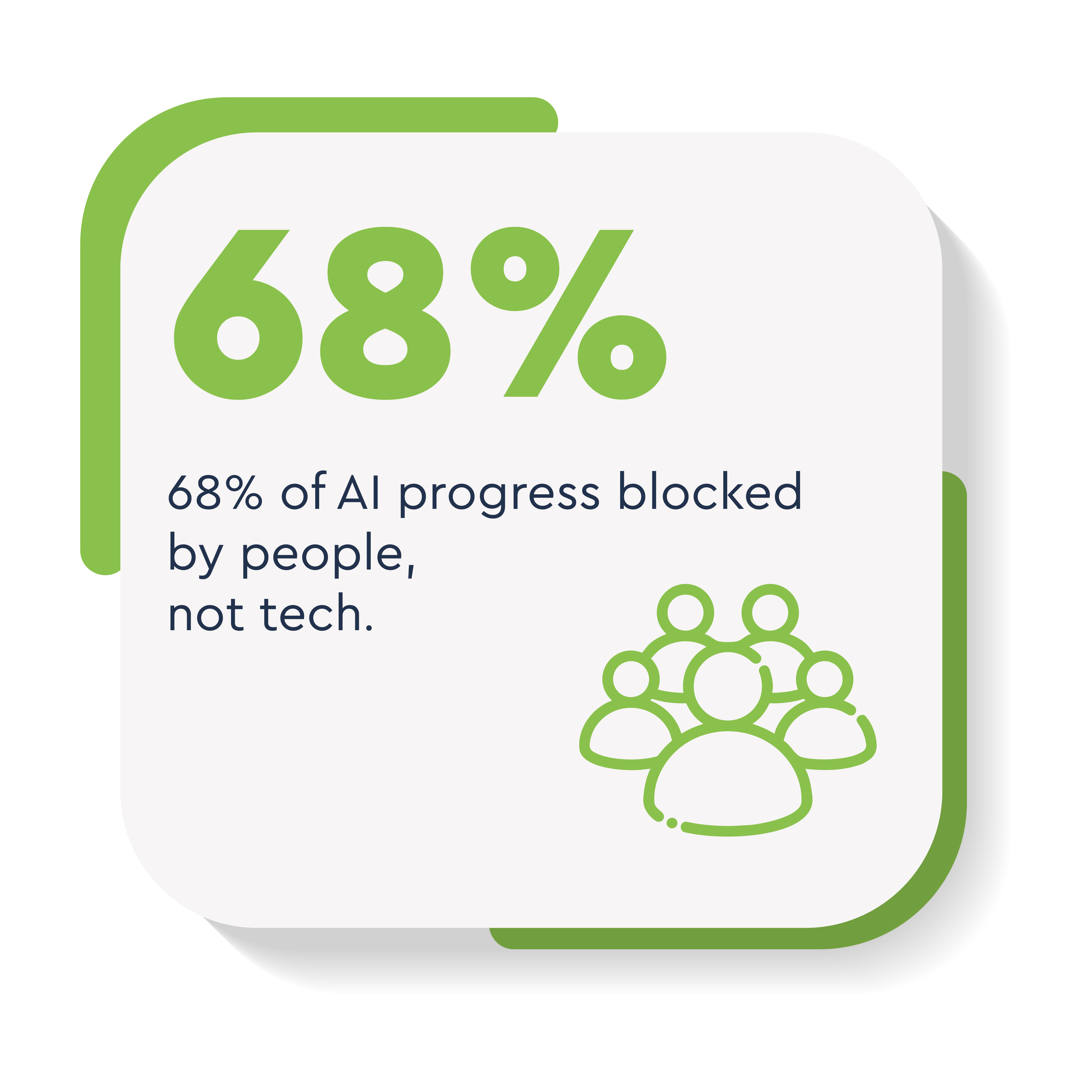
Research shows that organizational culture plays a significant mediating role in AI adoption and performance, shaping whether AI initiatives create measurable value or stall out. And leaders recognize this gap: 68% of technology executives say leadership buy‑in and people issues, not technology, block transformation progress.
How AI amplifies what already exists
These outcomes are not theoretical. Seven out of ten companies report minimal or no impact from their AI investments when cultural readiness is lacking.
Invest in culture before you deploy AI
If you want AI to accelerate performance, not expose weaknesses, start here:
1. Assess the culture you have today.
Gather feedback, observe behaviors, and identify which patterns you want AI to scale. Be explicit about the behaviors that create risk when amplified: like valuing speed over accuracy or tolerating inconsistency.
2. Define the culture you want to scale.
Set the “from‑to” behavioral shifts you expect as AI reshapes workflows. High performers redesign workflows intentionally rather than layering AI on top of old habits: half of AI high performers explicitly plan for workflow redesign as a success factor.
3. Model the culture through leadership behavior.
Leaders, not AI models, set the behavioral norms that AI will amplify. Yet fewer than half of executives believe their organizations demonstrate the psychological safety required for effective AI adoption.
The Bottom Line
AI is a force multiplier—nothing more, nothing less. If you invest in culture now, AI will scale your strengths. If you ignore it, AI will scale your liabilities. The transformation you get tomorrow depends on the culture you reinforce today.
Read the first article in the series, "Autonomy is the missing multiplier in every AI transformation," here.
Read the second article in the series, "AI doesn't fix culture. It exposes it," here.
Meet the Author





.svg)
.svg)





.webp)