




Two Seats, One Relationship: CEOs, CDOs, and the Principal Gift
Insights from six leaders about the relationship behind every transformational gift
I set out to write something about how a president or CEO and their chief development officer (CDO) work together on principal gift fundraising — those rare, transformational gifts where the dollar figure matters less than the fact that the president must be in the room. Six, seven, eight, sometimes nine figures, sure, but really, it's about the moments where the institution's top leader becomes part of the ask itself. What I got was three pairs of people who lit up talking about each other.
I talked to Ken Davis, former President and CEO of Mount Sinai Health System, and Mark Kostegan, Chief Development Officer, who spent eighteen years together before Ken transitioned to Executive Vice Chair of the Board. I talked to Frank Shushok, President of Roanoke College, and Nate Stewart, Vice President for Advancement, about two years into their partnership. And I talked to Khori Dastoor, General Director and CEO of Houston Grand Opera, and Darcy Douglas, Chief Development Officer, only six months in. Healthcare, higher ed, arts and culture — about as different as three sectors can be. And yet every conversation kept circling back to the same handful of truths.
I've spent twenty-five years in this world myself, mostly in stewardship, campaign planning strategy, and presidential and executive engagement — Beth Israel Deaconess, Dana-Farber Cancer Institute, Mass General Brigham. I've worked alongside fundraisers and chief development officers preparing for hundreds of donor conversations with the president, and I've sat close enough to that relationship to know what makes it work and what doesn't. So, a lot of what these three pairs told me didn't feel like new information. It felt like confirmation — of what actually works, from people who have lived it or are living it right now.
One more thing, before I get into what they said. All six of these leaders were warm, open, and genuinely happy to talk about their partner, not just their program. There was no posturing and no talking points. And every one of them, without exception, was clearly in love with the mission of their organization and fiercely protective of the people who support it. That came through more than any framework could.
Here's what I took away.
It's a Partnership, Not an Org Chart
Ask a CEO to describe their chief development officer's job and you expect a list of duties. That's not what I got. Ken Davis told me Mark's job was simple on paper — Mount Sinai had a lot of wealthy trustees, and Ken needed someone who knew how to build those relationships. But when he talked about what made the partnership work, the language shifted entirely, from job description to friendship. Before Mark had even officially started, Ken told him he was looking forward to a long friendship, not just a successful working relationship. Mark thought that was a strange thing to say to someone he'd barely met. Eighteen years later, he understood exactly what Ken meant.
Frank Shushok described Nate almost like a translator — someone who helps donors see how Roanoke's future is a natural extension of the place they remember. Nate, in turn, described himself as the closer's setup man: he builds the case, Frank delivers it. But what stuck with me wasn't the division of labor. It was how much trust both put in the other's half. Frank said he never second-guesses whether Nate is representing his vision honestly to donors. That's not something you get from a reporting structure. That's something you build.
And Khori Dastoor was the most direct of anyone about this. She told me flatly that she went looking for a partner when she hired Darcy, not a direct report — and that she'd actually worried her hands-on style might scare off good candidates. It didn't. Darcy told me it was the entire reason she left a job she liked for one she wasn't looking for: somebody who wanted to sit down, think five years out, and use her expertise instead of just handing her a number to hit.
None of these six leaders talked about their relationship in terms of authority. Every one of them talked about it in terms of trust — and every one of them described building that trust on purpose, not assuming it would just show up.
Who's in the Room, and When
This is the question I often see in my own work, and I wanted to know how these three pairs answer it. The honest answer, from all three: there's no formula.
Khori's rule of thumb is to meet with a donor one-on-one first and let Darcy follow up separately, unless there's a specific reason both need to be in the room together. She's protective of that time and doesn't want a meeting to feel like a panel interview. But she was equally clear that once you're talking about a principal gift, donors expect to hear from the person at the very top, and she doesn't wait for them to ask.
Ken and Mark never waited either. That was baked into how they worked from the start — if the gift was big enough to matter, it was both, every time, no discussion needed.
Frank and Nate described something a little different: a relationship that moves in both directions depending on the donor. Sometimes Frank opens a door and hands it to Nate to cultivate. Sometimes Nate has been working with someone for months and it's time to bring Frank in to close. What I liked about how Frank described it is that he sees the earliest part of a donor relationship — before anyone's thinking about an ask — as just asking good questions and listening. That's not a fundraising skill. That's a leadership skill that happens to be useful in fundraising.
No pair used a hard dollar threshold to decide who leads a donor relationship. All three factored in donor expectation, relationship history, and plain instinct — but every one of them agreed that above a certain gift size, the top leader's presence isn't optional.
Getting the Leader Ready — and Getting the Story Back
Every pair described some version of the same discipline: never let your leader walk into a donor meeting unprepared and never make them wade through more paper than they have time to read. Mark's rule with Ken was to keep it short and follow up in conversation. Before bigger cultivation trips — Palm Beach, Aspen — they'd rehearse together. Darcy does something similar with Khori, except Khori pushes back on the briefing materials until she's satisfied, by her own admission the toughest client her team has.
What I found more interesting was the piece nobody talks about: getting information back out of the leader after the meeting happens. Nate was candid that Frank doesn't always remember to loop him in after a solo donor conversation, even though that detail might matter enormously for what happens next. Frank owned it without any defensiveness — he said Nate has told him as much, kindly, and he's tried to get better. Nate's workaround is simple: if he doesn't hear anything within a day or two, he calls or walks down the hall. When he and Frank travel together, the debrief just happens naturally in the car.
Preparation isn't only about briefing documents. It's a loop, and the return half — getting the story back after the meeting — is the part that's easiest to skip and hardest to live without.
Two Stories That Say More Than Any Framework
Ken and Mark both went straight to the same story when I asked for an example of the partnership at its best: getting a longtime donor to put his name on the medical school. He had the capacity, but getting there wasn't going to be simple. So, Ken did what he does — years of informal dinners, no pressure, just relationship building. Meanwhile, Mark's office was quietly working out a giving structure that could handle a complicated mix of cash and a future estate commitment. When the donor's attorney eventually sent over a proposal, it matched almost exactly what Mark's team had already designed, and neither side had known the other was thinking along the same lines. Ken sealed it emotionally with a line about legacy — people remember the institution's name long after they've forgotten the complicated parts of how someone made their fortune. It took ten months of work with attorneys to finalize. Neither of them could have gotten there alone, and both said so without a hint of ego about it.
At Roanoke, Nate told me about a couple with no prior connection at all to the college until Frank got there. They'd known him years earlier at another institution, and it was their belief in him — how he treats students, how seriously he takes removing financial barriers — that followed him to Roanoke. But Frank was quick to point out that his relationship alone didn't seal it. It took the advancement team's follow-through, campus visits, and even the college's own students building a genuine rapport with the couple, to turn belief in a person into investment in an institution. The gift was seven figures, stewarded carefully, and the couple recently came back with a second gift of the same size. Frank's read on it stuck with me: donors need to trust the leader and the institution, and one without the other usually isn't enough.
Both stories needed two different kinds of work that neither person could do alone — the relationship and vision only the leader could bring, and the structure and follow-through only the development office could build.
Stewardship Between the Asks
This is the part of the job that never gets the spotlight, and it's the part I spent most of my own career doing, so I paid close attention to how each of these three leaders talked about it.
Nate described something at Roanoke that I recognized immediately: what he calls "assignments." His team will hand Frank a short, specific list — call this person, send a birthday note, thank someone for a smaller gift they made this year on top of their larger commitment. Frank's answer, every time, is some version of "yes sir, I'm on it." He doesn't treat it as busywork. He understands it's what makes the next principal gift possible.
Khori framed the same idea from a different angle. She was clear that closing a gift is the visible part of the job, but it's not actually the hard part. The hard part is everything underneath it — how gifts get acknowledged, how honestly the organization reports on what a donor's money did, whether the program has integrity from top to bottom. If that foundation isn't solid, she told me, she doesn't feel she has a leg to stand on when she's the one asking for a transformational gift.
Mark and Ken didn't use the word stewardship much, but it was everywhere in how they described their partnership. Every major gift got their full attention as a pair, not just at the ask, but in the ongoing relationship before and after — the two of them met constantly, compared notes, and made sure nothing about a donor's experience felt like it was on autopilot.
The ask is the moment everyone remembers, but every one of these leaders pointed to the unglamorous work between asks — the follow-through, the acknowledgment, the small gestures — as the real engine of principal gift fundraising.
What They'd Tell Someone Starting Out
Ken's advice for a new CEO was simple and, honestly, exactly what I'd tell one myself: treat philanthropy as core to the job, not an afterthought; build real relationships before you ever ask for money; and find a development leader who genuinely shares your vision, because that part can't be faked for long.
Nate's advice was about honesty, plain and simple — no surprises for the president, especially anything involving donors or trustees. If he hears something once, he notes it. If he hears it two or three times, he makes sure Frank knows before it becomes a problem. Frank's framing was about character and fit, and how hard that is to assess in a typical search process. He has a shorthand for it: date carefully. Get to know who you're really getting into this with before you commit.
Khori's advice went back to something she did before Darcy was even hired: she told her exactly what kind of leader she is, hands-on and all, so Darcy could make an informed choice instead of finding out the hard way. Start from honesty, she said, and let the other person choose you with open eyes.
Key Takeaways
1. Treat it as a partnership, not a reporting relationship. All three pairs, regardless of tenure, described their relationship in terms of trust and mutual service, not hierarchy.
2. There's no formula for who's in the room. Donor history, relationship stage, and gift size all factor in, but every pair agreed the top leader's presence isn't optional above a certain gift size.
3. Preparation must run both directions. Briefing the leader before a donor meeting is standard practice. Building a system to get the story back afterward is the part that's easy to skip and hard to live without.
4. Every major gift needs both halves. The leader's relationship and vision, and the development office's structure and strategy, aren't substitutes for each other.
5. Under-resourcing and under-asking are mirror-image mistakes. Executives who starve the development shop and officers who ask based on history instead of capacity both quietly cap what an institution can raise.
6. Say the quiet part out loud, early. Tenure and sector didn't predict a strong partnership. Honesty from the very first conversation, about how each person works and what they need, did.
If there's one thing I'd want another CEO or CDO reading this to take away, it's that none of these six people got lucky. They built this on purpose, one honest conversation at a time. I'm grateful they let me listen in.
Meet the Author


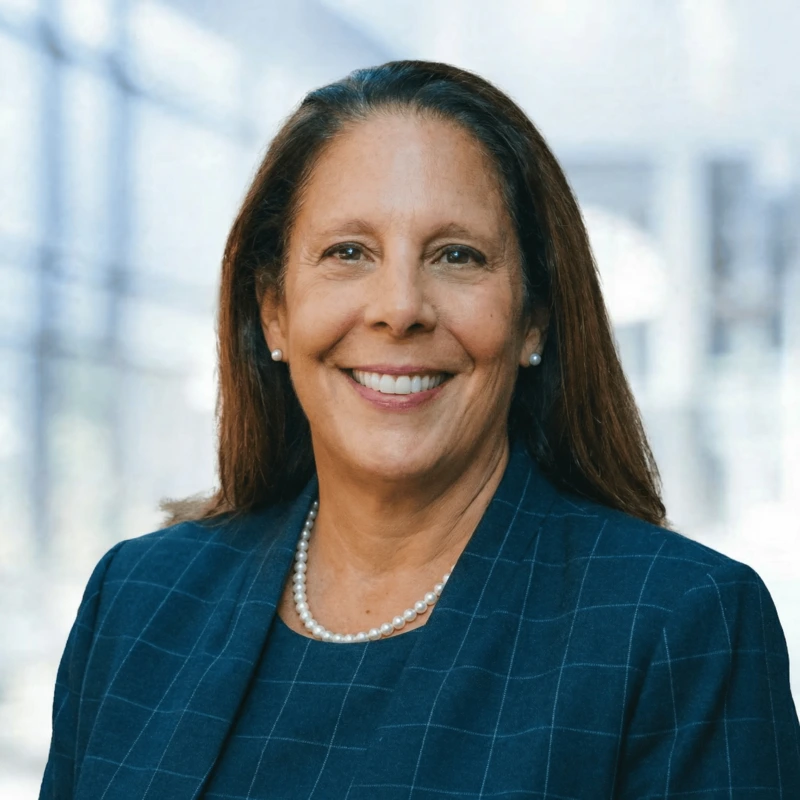
Rebecca DuFault
Principal