ZRG Insights

7 expensive misconceptions
about interim solutions

Get more
talent clarity

Seven expensive misconceptions that make interim leadership look like a compromise - when it may be the smartest move you make.

Five-minute read.

A CFO departs three weeks before year-end close.  A CHRO must lead a restructuring while the permanent search is still taking shape.  A growth company pushes toward an IPO with a finance function built for a smaller business.  A transformation has the strategy, the funding, the deadline... but not the executive bandwidth to execute it.

These moments are often called talent gaps.

That phrase is too passive.  A “gap" sounds like an empty chair - temporary, something to simply endure while the "real" answer is found.  But the close still has to happen. The board still expects answers.  The team still needs leadership.  Opportunity doesn't wait because the org chart is incomplete.

The question isn’t whether a missing capability is temporary.  The question is what becomes permanent while you wait to solve it.

Interim leadership has too often been treated as emergency cover: expensive, tactical, less serious than a permanent hire.  That view misses what the best interim executives and project teams actually do.  They don't just occupy the interval between leaders.  They enter moments of consequence, steady what cannot fail, and move what has stalled... so the organization can make a better long-term decision from a stronger position.

Here are the misconceptions that keep organizations waiting, when they should be moving. 
‍

The language gives the game away. Interim leader. Acting CFO. Temporary support. Stopgap solution.

Every phrase suggests a lesser version of the actual thing: someone who signs what must be signed, attends what must be attended, and keeps the machinery from making alarming noises until a permanent executive arrives. Like a substitute teacher.

There are assignments where continuity is sufficient. Many are not.

A business in transition does not need a placeholder when lenders want confidence, when an audit is at risk, when a workforce is uncertain, when a transformation is stalling, or when new ownership expects performance. It needs someone who can lead without a long runway, act without needing an apprenticeship, and leave the organization measurably better than they found it.

That is not lesser leadership. In some ways, it is leadership in its purest form: no inherited status, no extended settling-in period and no patience for confusing presence with progress.

What matters
An interim executive is not a substitute for a real leader. The right interim executive is a real leader built for a particular moment. The best interim leaders arrive with a different brief. They are not there to spend six months understanding why nothing can change. They are there to diagnose quickly, establish priorities, build credibility with a team that may already be strained and take responsibility for outcomes that do not become less important because the appointment is time-bound.

A permanent leader may ultimately be the right long-term answer. But for the work that must happen now, “permanent” is not a qualification; capability is.

1.

This feels orderly. First define the ideal role, then launch the search, then decide whether the process is taking long enough to require coverage. By then, the organization may have already paid for the delay.

A missing senior leader does not simply create more work for the people below him/her. Rather, it changes decisions. Problems wait longer to be surfaced, teams protect themselves rather than taking ownership, critical initiatives quietly lose momentum. A well-meaning internal caretaker may be asked to keep the lights on while simultaneously auditioning for a job they may or may not want - under conditions that make success unlikely.

Meanwhile, pressure begins distorting the permanent search. An organization that urgently needs relief is more likely to hire for immediate reassurance rather than lasting fit. The fastest acceptable permanent candidate begins to look like the best available answer.

What matters
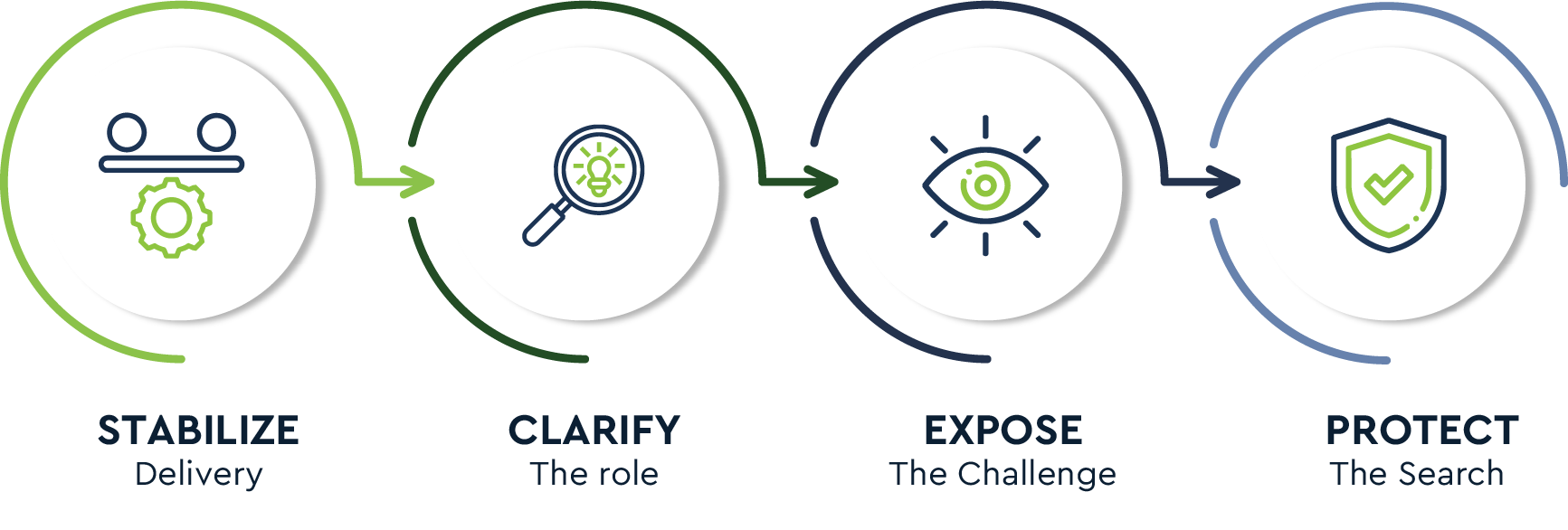
Interim leadership does not delay the permanent solution. It can protect the organization from making a rushed permanent mistake. A strong interim executive gives the business room to breathe - but not permission to drift. They can stabilize delivery, clarify what the role genuinely requires, expose the true scale of the challenge, and help separate the immediate crisis from the longer-lasting leadership mandate.

Importantly, this is where an integrated talent partner matters. Interim and executive search should not live in separate universes, with one team placing a temporary person and another later discovering what the business actually needed. Instead, they should inform one another. The immediate operator protects performance now. The search process finds the right leader for what comes next.

Sometimes the best permanent hire begins with refusing to let urgency make the decision for you.

2.

The most obvious trigger for interim talent is a departure. A leader resigns, retires, is removed or becomes unexpectedly unavailable. The seat is vacant, so an interim person fills it.

But that’s only the most visible use case - and perhaps the least imaginative. Organizations frequently have leaders in place and still lack the capacity or expertise required for the moment ahead. A CFO may be perfectly capable of leading the finance organization but unable to personally drive audit readiness, an ERP implementation, transaction preparation, and business-as-usual reporting at the same time. A CEO may have a strong team but no experienced resource to lead a postmerger integration. A CHRO may need specialist leadership for a workforce transformation while continuing to run the people agenda. A portfolio company may need execution discipline now, long before adding another permanent executive is sensible.

In those circumstances, there is no empty seat. There is an unowned outcome.

What matters
The most important interim assignment may not replace a person. It may make a critical priority executable. This is why the conversation should be larger than interim hiring. It’s about flexible leadership and project consulting: full-time interim executives when ownership is required, fractional leadership when senior capability is needed without permanent scale, and purpose-built project expertise when the business faces a defined challenge that cannot be handed to an already overloaded team.

Waiting for a vacancy before considering interim support is like waiting for an engine to fail before acknowledging that it has been losing power for months. The business doesn’t only need talent when somebody leaves; it needs talent when something essential must get done.

3.

When an organization suddenly needs an executive, a familiar tension appears: move quickly and risk lowering the bar. Be rigorous and accept that the business will have to wait.

It’s a false choice - but only if the interim partner has done the work before the call arrives. Rapid deployment does not come from skipping diligence; it comes from knowing the market, maintaining relationships with proven operators, understanding the pressures of specific roles, and being able to distinguish a polished resume from readiness to perform under actual operating conditions.

A senior finance leader who has run clean closes, navigated audit pressure, strengthened controls, and led teams through disruption is not interchangeable with someone who has simply held a large title. A transformation leader who has survived integration realities is not interchangeable with someone who can produce a beautiful roadmap. When the situation is urgent, relevance becomes more important - not less.

What matters
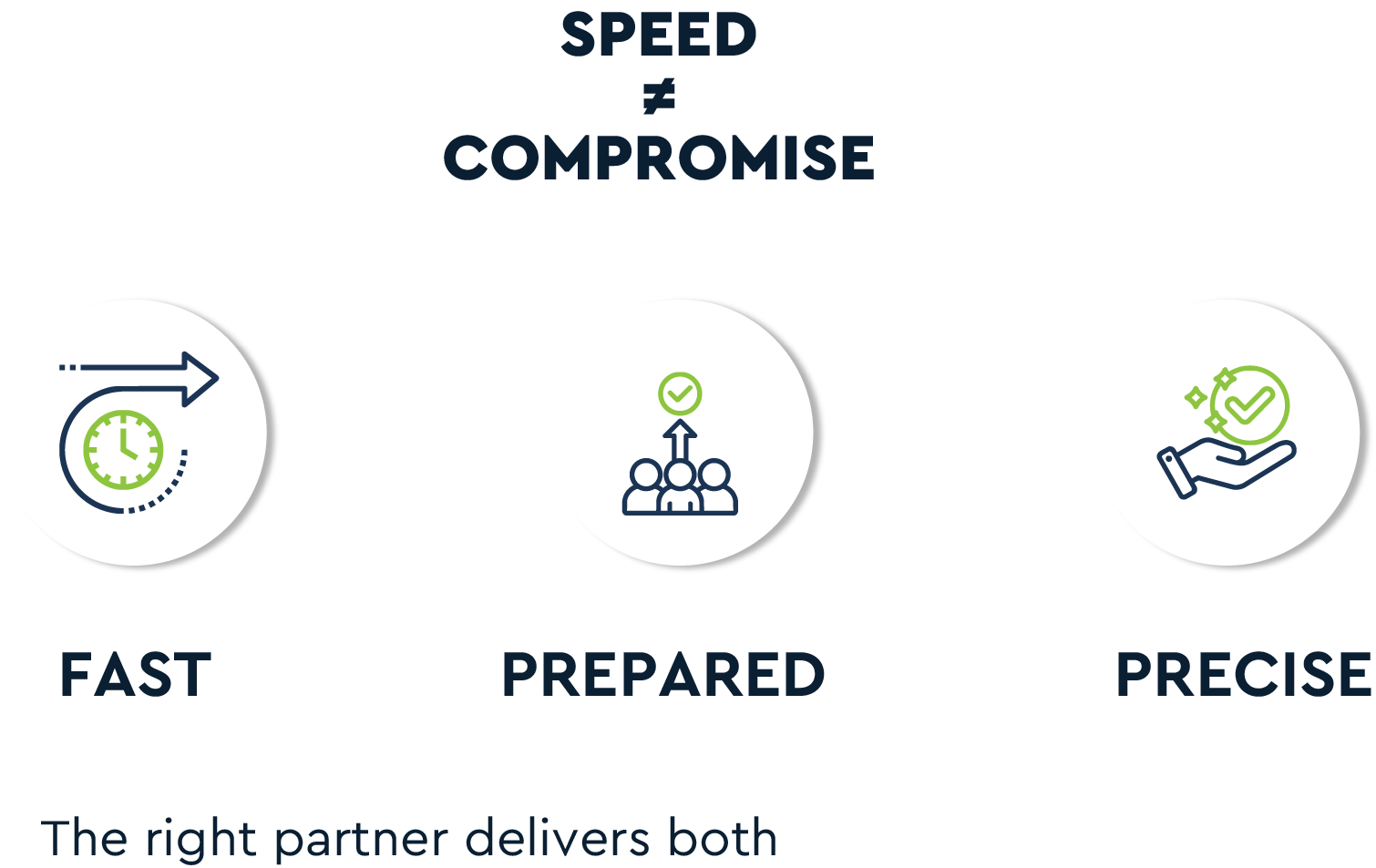
Slow is not the same as careful. Fast is not the same as careless. The right interim process is built for both pace and precision. It uses digital intelligence to surface relevant possibilities quickly, and it uses experienced human judgment to test whether those leaders have actually operated in comparable situations. It defines the near-term outcomes that matter, and it examines role,

culture, cadence, stakeholder complexity, and pressure points before the person begins - not after the mismatch becomes visible.

In a crisis or transition, delay carries its own quality risk. Every week without credible leadership is a week in which good people compensate, important work slips, and the organization makes decisions without the perspective it knows it needs.

Speed is not the enemy of quality. Unprepared speed is. And so is unexamined delay.

4.

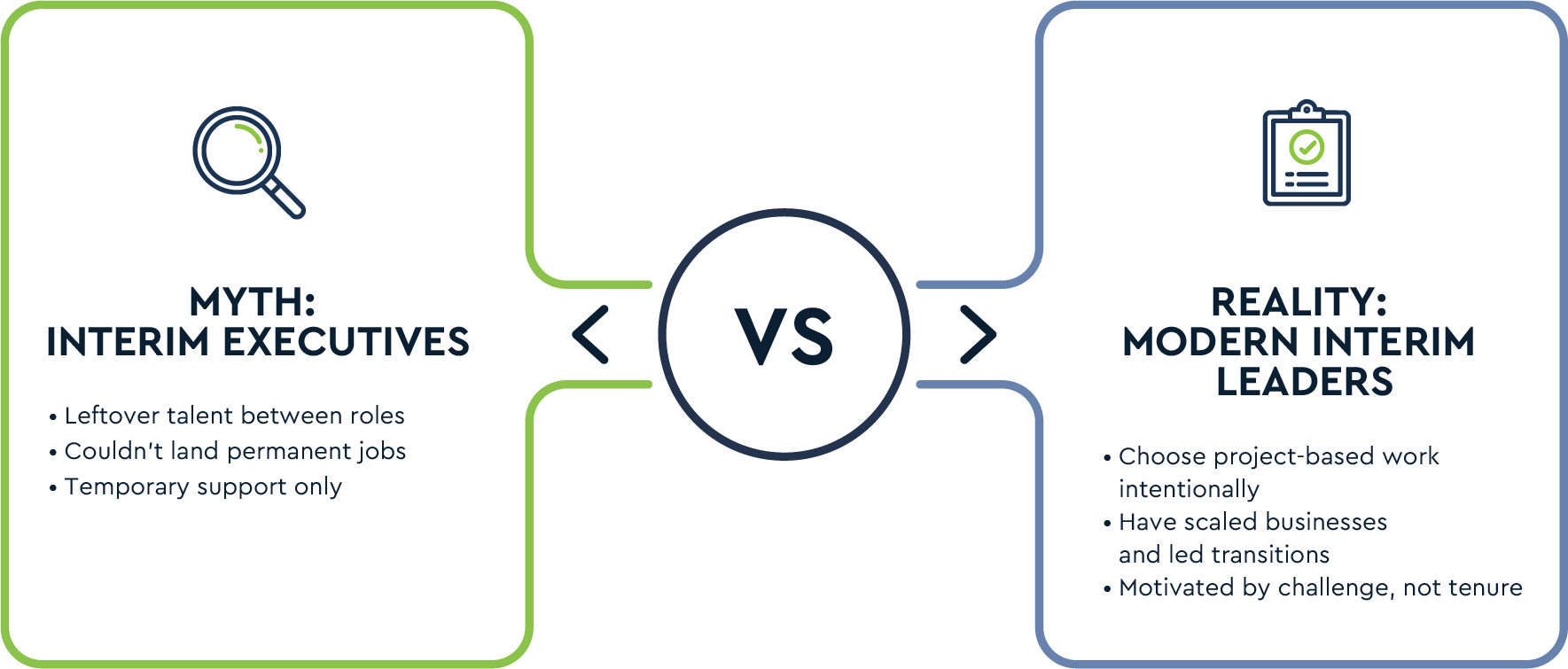
Organizations often imagine the interim market as the leftovers of executive talent: capable people between permanent jobs, people who could not land the long-term role, or people prepared to provide help but not ownership. That assumption is badly outdated.

For many accomplished executives, interim and project-based leadership is not a waiting room. It is the point. They have already built functions, scaled businesses, led transitions, fixed difficult problems or navigated high-stakes moments. They are motivated by meaningful challenges, not necessarily by another long tenure or another title on a corporate ladder.

They know how to enter quickly. They are comfortable with ambiguity. They have less need to protect a future internal empire. They can say what the business needs to hear because they were engaged to create movement, not to spend a first year accumulating political capital.

None of this means every available interim executive is exceptional. It means availability is not a reason to undervalue someone - just as permanence is not evidence that someone is better.

What matters
Some of the leaders best equipped to solve a high-stakes problem have intentionally built careers around solving exactly those problems.

The challenge is not persuading an organization that experienced operators exist. It’s accessing the right ones, understanding where they have truly delivered, and matching their pattern of experience to the business moment and challenge at hand.

Interim talent cannot be selected like extra hands. At the executive and specialist level, the value is not simply capacity; rather, it’s compressed experience: the ability to recognize what matters quickly because the leader has seen the movie before - and knows where it usually goes wrong.

5.

This myth comes from a sensible instinct. Do not allow a temporary executive to make permanent changes simply to prove they were there. Do not launch avoidable reorganizations, replace sound processes or create strategic zigzags that the eventual permanent leader must unwind.

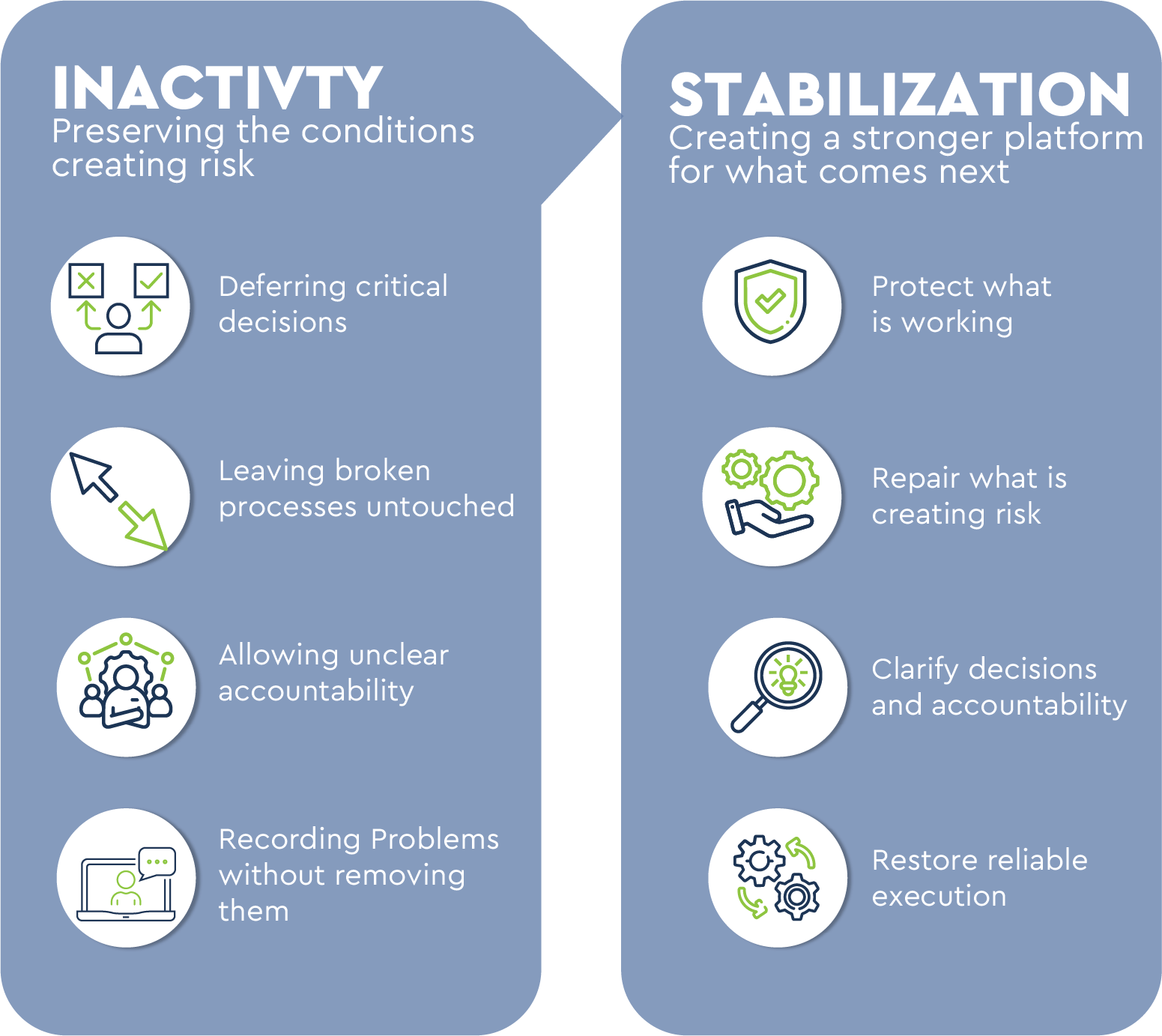
Correct. But stability is not inactivity.

Sometimes the organization is unstable precisely because decisions have not been made, processes have not been fixed, accountabilities have not been clarified, or difficult truths have

been left unstated. In those cases, “do not change too much” can become cover for preserving the very conditions that created the risk.

An interim CFO who leaves forecasting unreliable has not protected continuity. An interim CHRO who avoids the leadership issue everyone can see has not reduced disruption. An interim operations or integration leader who records delays without removing them has not stabilized the business.

What matters
The job of an interim leader is not to avoid leaving fingerprints. It is to leave the organization in a better condition than when he or she inherited it.

That requires a clear mandate from the beginning. What must be protected? What must be repaired? What decisions cannot wait? What changes require board or permanent-leader input? What will success look like at 30, 60 and 90 days?

Well-governed interim leadership is not reckless change – it’s accountable movement. The leader steps in with defined outcomes, works alongside the existing team, transfers insight rather than hoarding it, and creates a steadier platform for the permanent future.

Keeping a seat warm is a poor objective when the business needs someone to lower the temperature

6.

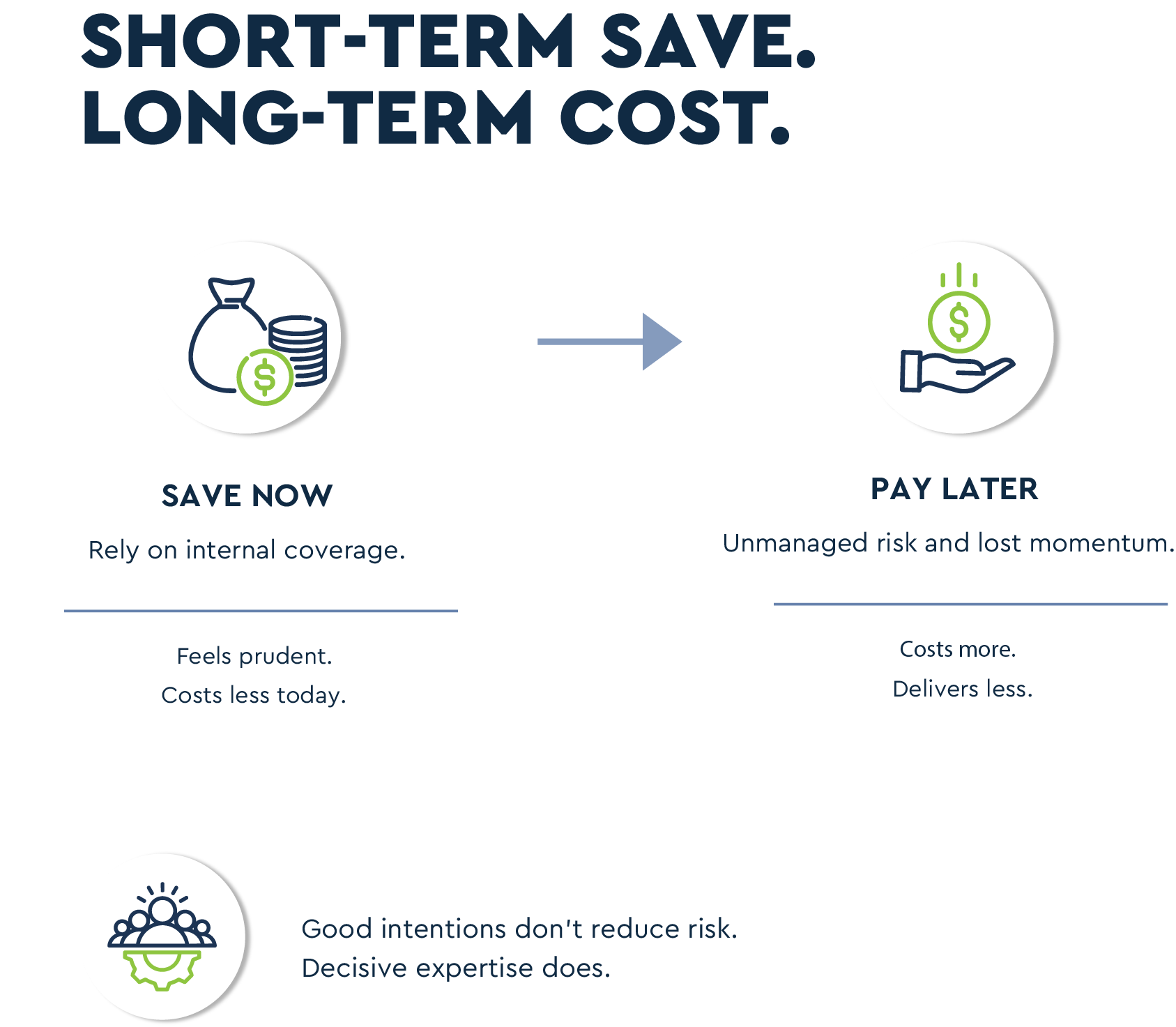
An interim executive has a visible cost. Internal coping and churn have almost none - at least on the first spreadsheet.

A capable deputy takes on more. The CEO stays closer to the issue. The team stretches. Meetings multiply. A project slips quietly rather than failing loudly. A forecast loses precision but remains plausible. A transformation deadline is moved for apparently sensible reasons. Strong performers absorb the strain because that is what strong performers do.

The organization calls this prudence, at least until the real invoices arrive – in the form of missed deadlines, weakened controls, delayed transactions, burnt-out successors. Other costs could include things like a board losing confidence, or a permanent executive recruited into a bigger mess than the one originally described. It often can be a leadership team spending its most expensive time managing an avoidable gap rather than advancing the business.

What matters
Interim support is not expensive because it has a cost. Unmanaged risk is expensive because its cost appears late.

This does not mean every gap demands an interim leader. It means the decision should be evaluated against the real exposure, not the comforting fiction that asking busy people to absorb important work is free.

What outcome is currently unowned? What risk is increasing each week? What strategic work is being deferred? What is the cost if the permanent search takes longer than expected? What does internal coverage prevent your best people from doing?

An interim leader should be measured not against the cost of doing nothing, because businesses never truly do nothing. They improvise, overload, postpone. They accept risks they would never consciously purchase.

The proper cost is the opportunity cost, and the cost of decisive expertise now versus the cost of discovering later what waiting actually did cost.

7.
TALK TO AN INTERIM EXPERT
Get expert insight on your
interim solutions need
Click a location marker
to learn more

GLOBAL SCALE. BOUTIQUE FEEL.

We are in the markets that matter, but we show up like we’re part of your team. Hands-on, high-touch, and built around your goals.